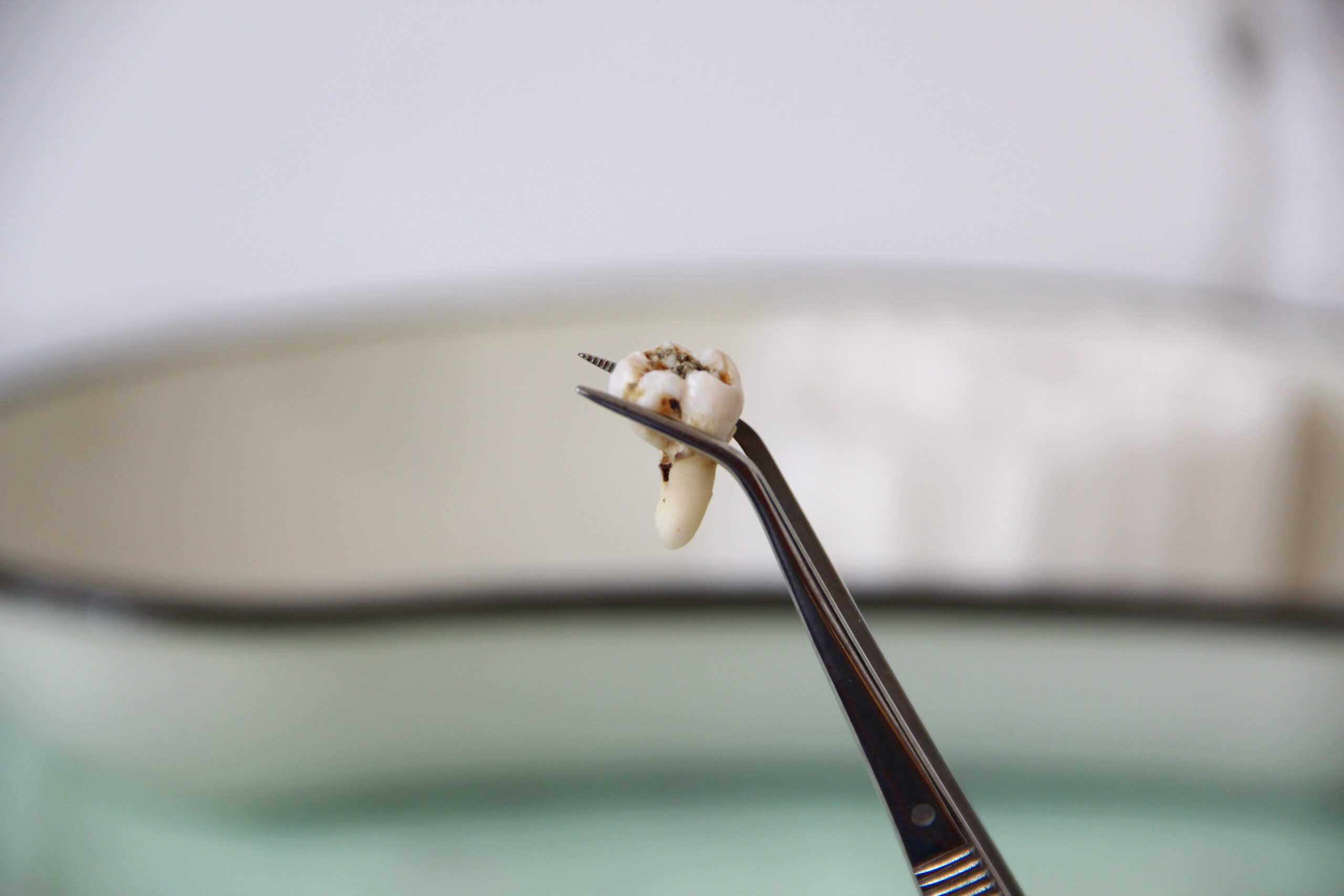

Not every patient has the bone density for traditional implants — or wants to wait months for one. Mini dental implants offer a smaller, often faster alternative. Here’s when they make sense.
When people picture dental implants, they usually imagine a standard-sized titanium post surgically placed into the jawbone. But there’s a smaller category worth knowing about: mini dental implants (MDIs). These narrower implants serve a specific and valuable role in modern dentistry, particularly for patients with limited bone width or those seeking a less invasive option.
At Belleview Dental Associates in Littleton, CO, we evaluate whether mini implants — or standard-sized implants — are the better fit for each patient’s unique anatomy and goals. Here’s what you need to know.
What Are Mini Dental Implants?
Mini dental implants are narrower versions of traditional implants, generally measuring between 1.8mm and 3.0mm in diameter, compared to the 3.5mm to 6mm range typical of standard implants. Many mini implants also feature a one-piece design, where the implant post and the ball-shaped attachment point are a single unit, rather than the two-piece system (separate implant and abutment) common in standard implants.
This smaller size and simpler design make mini implants particularly useful in situations where a standard implant isn’t feasible or is more invasive than necessary.
How Mini Implants Differ From Standard Implants
| Feature | Mini Implants | Standard Implants |
| Diameter | 1.8mm–3.0mm | 3.5mm–6mm |
| Design | Often one-piece | Typically two-piece (implant + abutment) |
| Bone requirements | Can work with narrower ridges | Requires more bone width and volume |
| Surgical invasiveness | Minimally invasive, often no incision needed | More involved surgical procedure |
| Typical use cases | Stabilizing dentures, narrow spaces, smaller teeth | Single crowns, bridges, full-arch restorations |
| Load-bearing capacity | Lower than standard implants | Higher, suited to larger chewing forces |
Common Uses for Mini Dental Implants
Denture Stabilization
This is one of the most popular applications. Patients who struggle with loose, shifting lower dentures can have a series of mini implants placed to create secure attachment points. The denture then snaps onto these implants, dramatically improving stability and confidence while eating and speaking — without the more extensive surgery and cost associated with a full implant-supported denture using standard-sized implants.
Replacing Small Teeth
Mini implants are sometimes used to replace smaller teeth, such as lower front incisors, where there simply isn’t enough space for a standard-diameter implant between neighboring teeth.
Patients With Narrow Jawbone Ridges
Some patients have a naturally narrow bone ridge, or have experienced bone resorption after long-term tooth loss, that makes a standard implant difficult to place without bone grafting. Mini implants can sometimes be placed successfully in these narrower ridges without requiring grafting first.
Patients Seeking a Less Invasive Option
Because mini implants are smaller and often placed with a minimally invasive technique — sometimes without the need to fully open the gum tissue — they can be an appealing option for patients who want to avoid more extensive oral surgery, have certain health conditions that make them poorer candidates for more invasive procedures, or want a faster overall process.
Advantages of Mini Dental Implants
- Less invasive placement, often with less discomfort and a shorter procedure time
- Can often be placed in narrower bone without grafting
- Frequently more affordable than standard implants, particularly for denture stabilization cases involving multiple implants
- Faster overall timeline in many cases, since the smaller size can sometimes allow for earlier loading
- Good option for patients who aren’t candidates for bone grafting due to health factors or personal preference
Limitations of Mini Dental Implants
It’s important to have realistic expectations. Mini implants aren’t simply a smaller, cheaper version of standard implants suitable for every situation — they have real limitations:
- Lower load-bearing capacity, making them less suited to replacing single molars, which bear significant chewing force
- Less extensive long-term research compared to standard implants, though clinical use has grown significantly over the past two decades
- Potentially shorter lifespan in some high-stress applications compared to standard implants, depending on placement location and use
- Not suitable for every case — a thorough evaluation is necessary to determine whether a mini implant will provide adequate long-term support for your specific situation
Who Should Consider Mini Implants?
Mini implants tend to be an excellent option for:
- Patients seeking improved denture stability who want to avoid the cost and invasiveness of a full standard-implant-supported denture
- Patients with narrow bone ridges who aren’t good candidates for, or don’t want, bone grafting
- Patients replacing smaller front teeth where space is limited
- Patients seeking a less invasive procedure due to health considerations or personal preference
Mini implants are generally not the first choice for replacing molars or in situations involving significant chewing force, where a standard implant’s greater strength and stability are usually preferred.
The Evaluation Process
Determining whether a mini or standard implant is right for you involves the same thorough evaluation used for any implant case: a review of your dental and medical history, a clinical exam, and 3D imaging to assess your bone width, height, and density. Your dentist will discuss which option offers the best balance of durability, cost, and invasiveness for your specific goals.
Maintenance and Care
Mini implants require the same diligent care as any implant: regular brushing and flossing around the implant and any attached restoration, routine professional checkups, and prompt attention to any looseness or gum irritation. Denture wearers with mini-implant-retained dentures should also follow their dentist’s specific cleaning instructions for the attachment components to ensure a secure, hygienic fit over time.
Making the Right Choice
Mini dental implants aren’t a “lesser” option — they’re a purpose-built solution for specific clinical situations, particularly denture stabilization and narrow-bone cases. The key is working with a dentist who will honestly assess whether your case calls for a mini implant, a standard implant, or a standard implant with bone grafting, rather than defaulting to whichever is most convenient.
Frequently Asked Questions
Are mini implants a permanent solution, or a temporary fix? When placed appropriately for the right case, mini implants can provide a durable, long-term solution, particularly for denture stabilization. They’re not simply a temporary or “starter” option, though their best applications differ from standard implants.
Can mini implants be used to replace a molar? Generally, this isn’t recommended, since molars bear significant chewing force that mini implants aren’t designed to withstand as reliably as standard-sized implants. Standard implants are typically the better choice for back-tooth replacement.
Do mini implants require less healing time? Often, yes — many mini implant procedures involve a less invasive placement technique and may allow for earlier loading in appropriate cases, though your dentist will confirm the right timeline based on your specific situation.
Can I switch from mini implants to standard implants later? In some cases, yes, particularly if your needs or bone situation change over time. This is a conversation worth having with your dentist as part of your long-term treatment planning.
Find Out if Mini Implants Are Right for You
If you’re dealing with a loose denture, limited bone width, or simply want to understand your full range of options, our team at Belleview Dental Associates in Littleton, CO can provide a clear, honest recommendation based on your specific anatomy and goals.
Schedule a consultation today to explore whether mini dental implants are the right fit for your smile.