
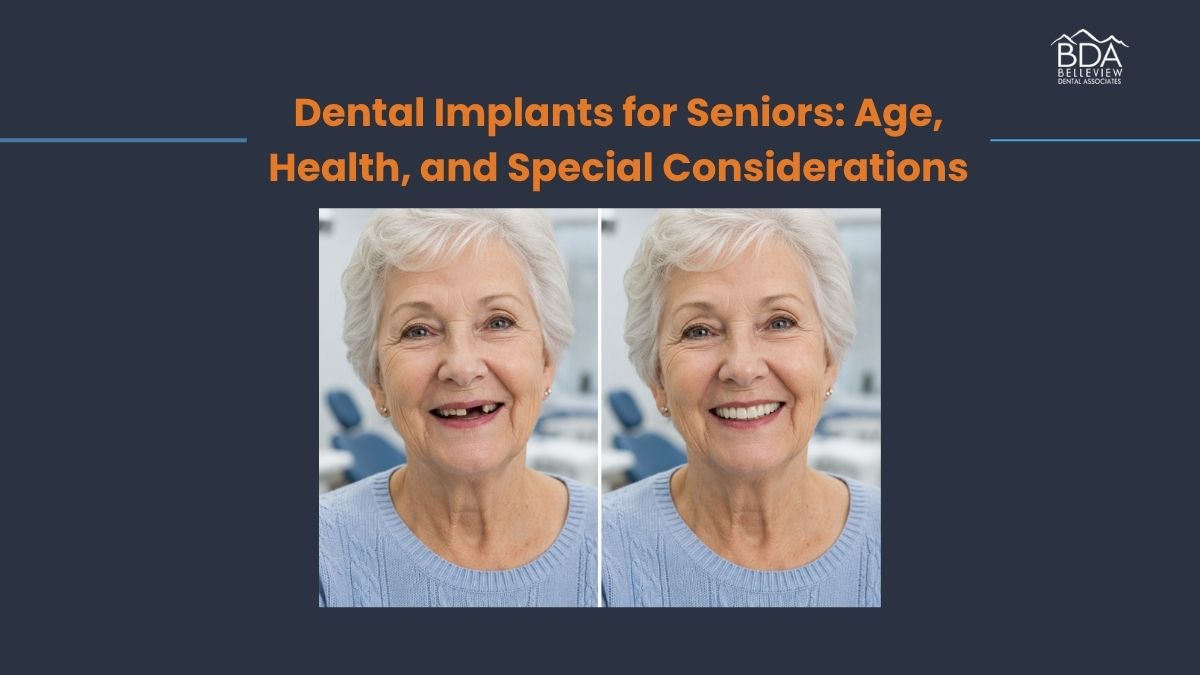
Age alone is rarely a barrier to dental implants. Here’s what older adults and their families should actually consider when weighing this option.
A common misconception persists in dentistry: that dental implants become less viable, or riskier, as patients get older. In reality, age itself is not a disqualifying factor for implant treatment. What matters far more is overall health, bone quality, and how well any existing medical conditions are managed. Many of our most successful implant patients at Belleview Dental Associates are in their 70s, 80s, and beyond.
Here’s an honest, practical guide to what seniors and their families should know when considering dental implants.
Why Age Isn’t the Deciding Factor
Dental implants succeed based on biological healing capacity and bone quality — not chronological age. A healthy, active 78-year-old with good bone density and well-managed health conditions is often a better implant candidate than a 45-year-old with uncontrolled diabetes and heavy smoking habits. Research on implant outcomes in older populations consistently shows success rates comparable to younger patients when appropriate health factors are accounted for and managed.
That said, older adults are statistically more likely to have certain health conditions or take medications that require special consideration during treatment planning — which is why a thorough evaluation matters more than a birth date.
Common Considerations for Senior Patients
Bone Density and Osteoporosis
Bone density naturally tends to decrease with age, and osteoporosis is more common in older adults, particularly postmenopausal women. This doesn’t automatically rule out implants, but it does mean a thorough 3D imaging assessment is especially important to confirm adequate bone volume and density, or to plan for bone grafting if needed.
Patients taking certain osteoporosis medications, particularly a class called bisphosphonates (especially in injectable, high-dose forms used for conditions like cancer treatment), require special discussion with both their dentist and physician, since these medications can, in rare cases, affect bone healing after oral surgery. Oral bisphosphonates taken for standard osteoporosis management generally carry a much lower risk profile, but should still be disclosed to your dentist.
Diabetes Management
Diabetes becomes more prevalent with age, and blood sugar control plays a meaningful role in healing after any surgical procedure, including implant placement. Well-managed diabetes — with blood sugar levels kept in a healthy target range — is associated with implant success rates similar to non-diabetic patients. Poorly controlled diabetes, on the other hand, can slow healing and increase infection risk. Coordinating with your physician to optimize blood sugar control before treatment is often a worthwhile step.
Cardiovascular Conditions and Blood Thinners
Many older adults take blood-thinning medications for heart health or stroke prevention. These medications don’t necessarily prevent implant surgery, but they do require careful planning and, in some cases, coordination with your prescribing physician regarding whether any temporary adjustment is appropriate — a decision that should always be made by your physician, never by stopping medication on your own.
Dry Mouth
Reduced saliva production becomes more common with age and is also a side effect of many common medications, including some used for blood pressure, depression, and allergies. Saliva plays an important role in protecting oral tissue and controlling bacteria, so dry mouth can slightly increase the risk of gum issues around an implant if not addressed. Simple strategies like increased water intake, saliva substitutes, and diligent oral hygiene can effectively manage this.
Healing Time and Overall Recovery
Some older patients experience slightly slower tissue healing, though this varies enormously from person to person and is influenced far more by overall health and lifestyle factors than age alone. Your dentist may build in slightly more conservative healing timelines for certain cases, but this doesn’t change the fundamental process or long-term outlook.
Benefits of Implants Specifically for Seniors
Improved Nutrition
Missing teeth or ill-fitting dentures often lead older adults to avoid nutrient-dense foods that require more chewing, like fresh vegetables, fruits, and lean proteins — sometimes contributing to broader nutritional deficiencies. Implants restore reliable chewing function, making a wider, healthier range of foods comfortable to eat again.
Preserving Jawbone and Facial Structure
Bone loss from missing teeth can gradually change facial appearance over years, sometimes contributing to the sunken look associated with long-term denture wear. Implants uniquely help preserve jawbone by continuing to stimulate it the way natural roots do — an especially valuable benefit for seniors looking to maintain their facial structure long-term.
Stability and Confidence
For seniors currently struggling with loose dentures, implant-supported options (including full-arch solutions like implant-retained dentures or All-on-4) offer dramatically improved stability, allowing for confident eating, speaking, and social engagement without fear of slipping.
Independence in Daily Care
Fixed implant restorations are cared for essentially like natural teeth — brushing and flossing — without the daily removal, soaking, and adhesive routines that removable dentures require. For seniors managing arthritis or limited dexterity, this can be a meaningful quality-of-life improvement.
What a Thorough Senior Evaluation Includes
At Belleview Dental Associates, evaluating an older patient for implants involves the same rigorous process as any patient, with particular attention to:
- A complete medical history, including all current medications
- Coordination with your physician when relevant, particularly regarding diabetes management, bone-affecting medications, or blood thinners
- 3D imaging to assess bone density and volume
- An honest discussion of your specific health factors and how they may (or may not) affect treatment planning
- A realistic timeline that accounts for your individual healing pace
Addressing Common Concerns From Seniors and Families
“Am I too old for this procedure?” In most cases, no — health status matters far more than age itself.
“What if I have several health conditions?” Many chronic conditions, when well-managed, don’t disqualify someone from implants. A collaborative approach with your physician often allows treatment to proceed safely.
“Is the healing process harder for older patients?” It can take slightly longer in some cases, but the fundamental process and long-term success rates remain strong for healthy seniors.
“Wouldn’t dentures be simpler at this stage of life?” Simpler upfront, perhaps — but often less comfortable and stable long-term, and dentures don’t prevent the ongoing bone loss that can affect facial structure and fit over the years.
A Personalized, Honest Approach
Every senior patient’s health picture is different, and the right approach is a personalized evaluation — not a blanket assumption based on age. Many of our patients at Belleview Dental Associates who assumed they were “past the point” of getting implants have been pleasantly surprised to learn they were, in fact, excellent candidates.
Frequently Asked Questions
Is there an upper age limit for getting dental implants? No specific age cutoff exists. Overall health, bone quality, and healing capacity matter far more than chronological age. Many patients in their 80s and beyond have successfully received implants after a thorough health evaluation.
Do seniors need medical clearance from their physician before implant surgery? It depends on individual health factors. Patients managing conditions like diabetes, osteoporosis, or those on blood thinners may benefit from coordinated communication between their dentist and physician, though formal clearance isn’t always required.
Are implants a good option for someone already wearing dentures for many years? Often, yes, though longstanding denture wear can lead to more significant bone loss that may require grafting or a full-arch approach like implant-supported dentures. A 3D scan will clarify what’s realistic for your specific bone structure.
Will Medicare or insurance help cover implants for seniors? Original Medicare generally doesn’t cover routine dental implant procedures, though some Medicare Advantage plans and standalone dental insurance policies offer partial coverage. Our team can help you understand your specific benefits.
Schedule a Senior-Focused Consultation in Littleton, CO
If you or a loved one is considering dental implants and wondering whether age or health conditions might be a barrier, we invite you to schedule a thorough, honest consultation with our team at Belleview Dental Associates. We’ll work closely with you — and your physician, when appropriate — to determine the safest, most effective path toward a confident, functional smile.
Contact our Littleton office today to get started.