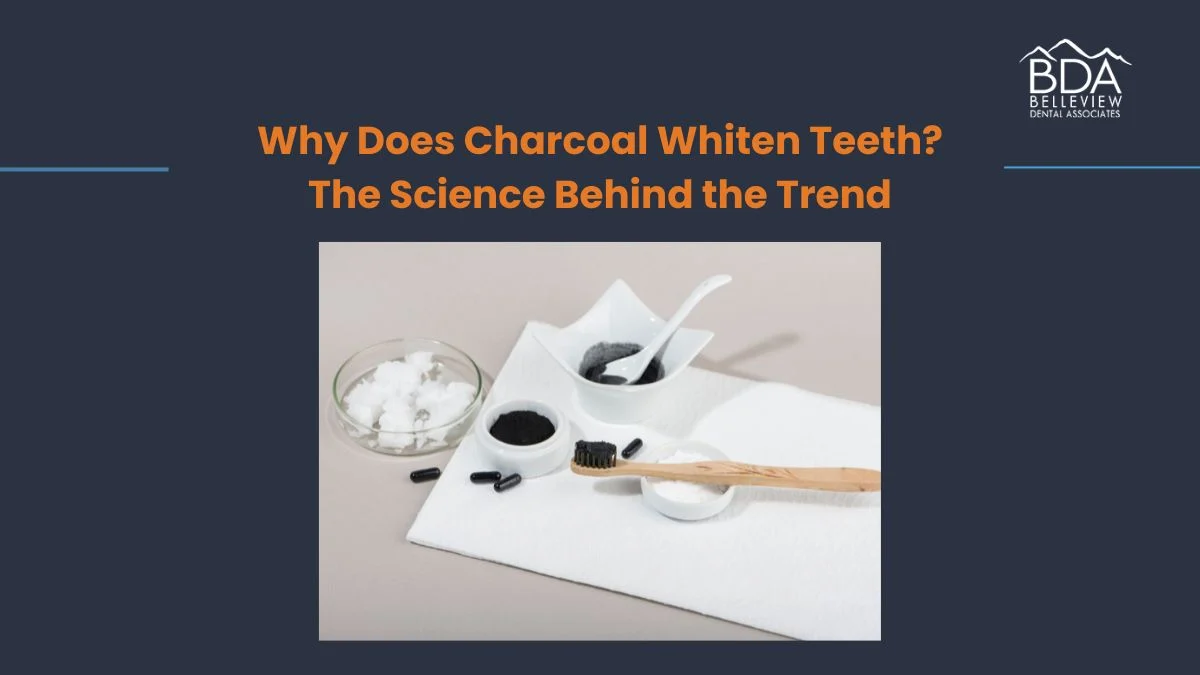
Activated charcoal toothpaste and powders have been marketed as a natural whitening alternative for years, and the before-and-after photos can be convincing. But what’s actually happening when charcoal touches your teeth is different from what most people assume — and it’s worth understanding before you make it part of your routine.
How Activated Charcoal Is Supposed to Work
Activated charcoal is highly porous, which gives it a large surface area that can adsorb — bind to — certain compounds it comes into contact with. Combined with its naturally gritty texture, this lets it physically scrub surface stains off the enamel as you brush. That’s a fundamentally different mechanism from peroxide-based whitening, which chemically breaks down stain molecules through oxidation rather than scrubbing them away.
What the Research Actually Shows
Studies on charcoal-based whitening products link the effect to charcoal’s adsorption capacity and porous structure — essentially confirming the scrubbing mechanism rather than any bleaching action. Separately, research evaluating charcoal powders for true dental bleaching found them ineffective at that specific task, reinforcing that whatever whitening effect people notice is limited to surface stain removal, not a change in the tooth’s actual color.
Why Dentists Are Cautious About It
The same abrasiveness that removes surface stains can also wear down enamel with regular or aggressive use, especially when paired with a hard-bristled brush or heavy pressure. Once enamel wears thin, the yellower dentin layer underneath becomes more visible — which can make teeth look more discolored over time, not less. Most charcoal toothpaste also lacks fluoride, meaning it skips one of the most important cavity-prevention ingredients in a typical toothpaste.
How Long Results Actually Last
Because charcoal only addresses surface staining, any whitening effect is modest and temporary — it fades as new surface stains accumulate from coffee, tea, or food, and it does nothing to change your tooth’s underlying natural shade. Results typically require continued use to maintain, and they can’t take teeth lighter than their natural color the way professional bleaching can.
Safer Ways to Get a Similar (or Better) Effect
- ADA-accepted whitening toothpaste: uses a controlled, low concentration of peroxide designed to be gentle on enamel with daily use.
- Professional cleanings: remove surface stains and tartar without any abrasive risk to enamel.
- In-office or dentist-supervised take-home whitening: uses higher, professionally monitored peroxide concentrations for more dramatic and even results.
Frequently Asked Questions
Q: How long does it take for charcoal to whiten teeth?
Any visible effect from charcoal typically requires several weeks of consistent use, and even then the result is limited to a modest reduction in surface staining.
Because it works by physically scrubbing rather than bleaching, charcoal can’t produce the faster, more dramatic lightening that peroxide-based whitening achieves.
Q: Do dentists recommend charcoal toothpaste?
Most dentists don’t recommend charcoal toothpaste as a regular part of an oral care routine because of its abrasiveness and lack of fluoride.
Occasional use is unlikely to cause serious harm for most people, but daily long-term use raises real concerns about enamel wear, which is irreversible once it happens.
Q: Why did Colgate put charcoal in their toothpaste?
Major toothpaste brands added charcoal formulations in response to strong consumer demand for natural-sounding whitening products, not because charcoal outperforms standard whitening ingredients.
These commercial formulations are generally engineered to be less abrasive than raw activated charcoal powder, which softens (but doesn’t eliminate) the enamel-wear concerns associated with charcoal in general.
Q: Is charcoal toothpaste safe for enamel with daily use?
Daily use is the main risk factor — occasional use is unlikely to cause noticeable harm, but regular, long-term brushing with an abrasive charcoal formula can gradually wear down enamel.
Since enamel doesn’t regenerate once it’s worn away, it’s worth limiting charcoal toothpaste to occasional use, using a soft-bristled brush, and avoiding heavy pressure while brushing with it.
Conclusions
Charcoal can make a temporary dent in surface stains, but it’s not a substitute for a professionally guided whitening approach — and used carelessly, it can end up working against the smile you’re trying to improve.
If you want a whitening approach that’s actually built for your enamel, Belleview Dental Associates in Littleton can talk through the safest option for your teeth.