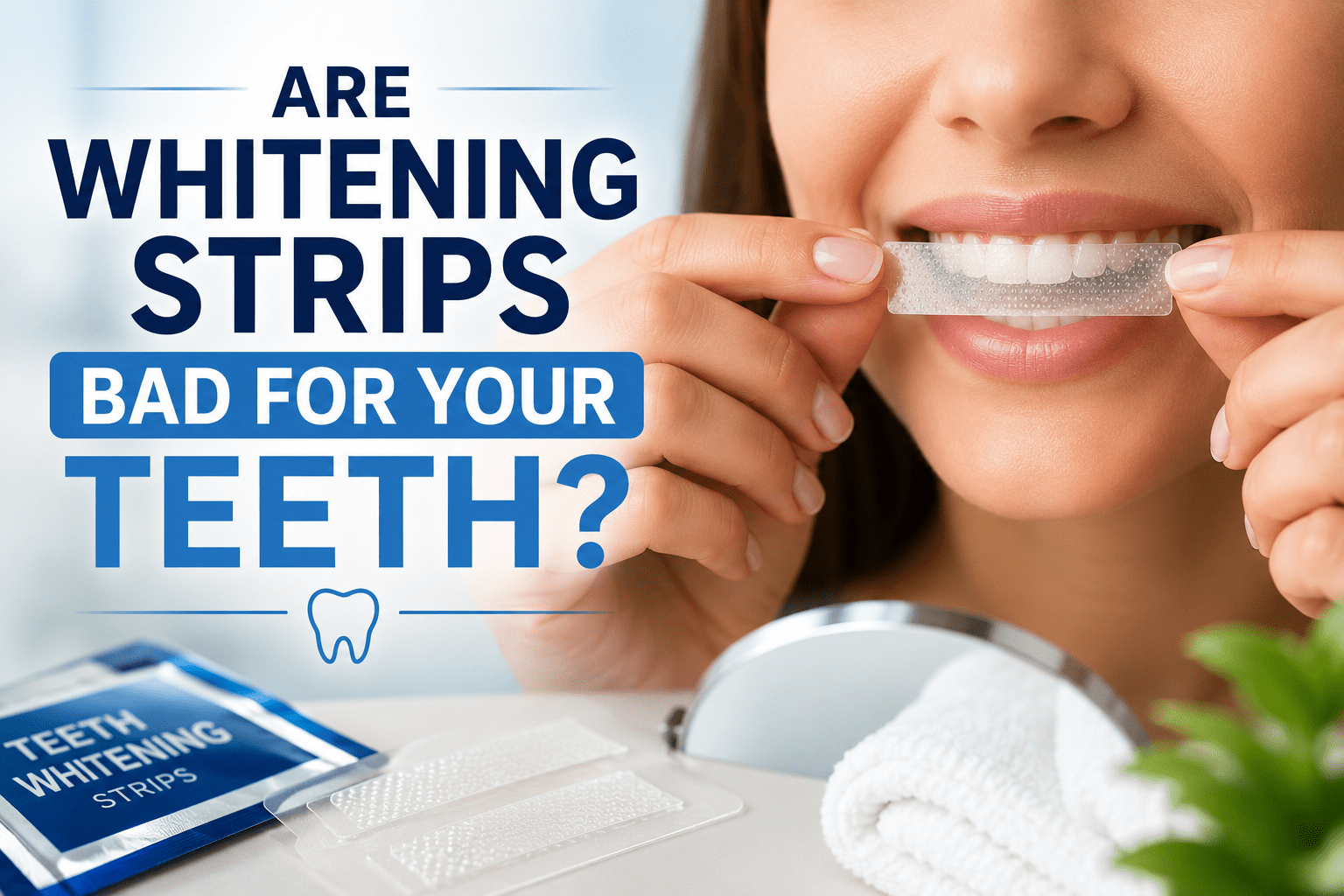
Teeth whitening has become one of the most popular cosmetic dental treatments, and whitening strips are often a go-to option for people looking to brighten their smiles at home. But with their growing popularity, many patients wonder whether they are truly safe or if they can harm their teeth.
At Belleview Dental Associates, we believe it’s important to understand both the benefits and potential risks before using any whitening product.
What are Whitening Strips?
Whitening strips are thin, flexible plastic strips coated with a peroxide-based whitening gel. They are designed to adhere to the surface of your teeth, delivering bleaching agents that help remove stains and discoloration.
These strips are typically used once or twice a day for a set period, depending on the product instructions. Over time, whitening strips can noticeably improve the brightness of your smile.
Are Whitening Strips Safe?
When used correctly, whitening strips are generally safe for most people. They are approved for over-the-counter use and can effectively remove surface stains caused by coffee, tea, wine, and other common sources.
However, safety largely depends on how they are used. Following instructions carefully is essential to avoid unwanted side effects. Overuse or improper application of whitening strips can lead to problems that affect both comfort and oral health.
Potential Side Effects of Whitening Strips
Although effective, whitening strips can sometimes cause temporary tooth sensitivity. This happens because the whitening agents penetrate the enamel to break down stains, which can irritate the inner layers of the tooth.
Some users may also experience gum irritation, especially if the strips come into contact with soft tissue. In most cases, these effects are mild and go away after stopping use.
More concerning issues can arise if whitening strips are used too frequently or for longer than recommended. Over time, excessive use may weaken enamel, making teeth more vulnerable to damage. Like many dental concerns, these effects may develop gradually and are not always immediately noticeable.
Who Should Be Cautious?
While whitening strips are safe for many people, they may not be suitable for everyone. Individuals with sensitive teeth, gum disease, worn enamel, or existing dental restorations such as crowns or veneers should use caution.
Whitening products do not affect restorations in the same way they affect natural teeth, which can lead to uneven results. Consulting with a dentist before using whitening strips is the best way to ensure they are appropriate for your specific situation.
How to Use Whitening Strips Safely
To minimize risks, it’s important to use whitening strips exactly as directed. Avoid leaving them on longer than recommended, and do not use them more frequently than instructed.
If you notice increased sensitivity, taking a break between treatments can help. Maintaining good oral hygiene and using toothpaste designed for sensitive teeth can also reduce discomfort.
Being mindful of how your teeth respond will help you get the benefits of whitening strips without compromising your oral health.
Professional Alternatives to Whitening Strips
While whitening strips can provide noticeable results, professional whitening treatments offer a safer and more controlled approach. In-office treatments are supervised by dental professionals and can deliver faster, more consistent results.
Custom take-home whitening kits from your dentist are another effective option. These are designed to fit your teeth precisely, reducing the risk of gum irritation and improving overall effectiveness.
Why Choose Belleview Dental Associates
At Belleview Dental Associates, we are dedicated to helping patients achieve brighter smiles safely. Whether you’re considering whitening strips or exploring professional whitening options, our team provides personalized guidance based on your dental health and goals.
We focus on protecting your enamel while delivering results you can feel confident about. With a combination of expertise and advanced technology, we ensure that your whitening experience is both safe and effective.
Conclusion
Whitening strips are not inherently bad for your teeth when used properly. They can be a convenient and effective way to improve your smile at home. However, overuse or improper application can lead to sensitivity, gum irritation, and potential enamel damage.
For the best results, it’s important to use whitening strips responsibly and consult with your dentist if you have any concerns.
At Belleview Dental Associates, we’re here to help you achieve a brighter, healthier smile with safe and effective whitening solutions. Contact us today to learn more about your options.
Frequently Asked Questions
Do whitening strips damage enamel?
When used as directed, whitening strips do not typically damage enamel. Overuse, however, may increase the risk of weakening it.
How long do results from whitening strips last?
Results can last several months, depending on your diet and oral hygiene habits.
Can whitening strips cause sensitivity?
Yes, temporary sensitivity is a common side effect of whitening strips, but it usually goes away after treatment ends.
Are whitening strips better than professional whitening?
Whitening strips are convenient, but professional treatments are often more effective and customized.