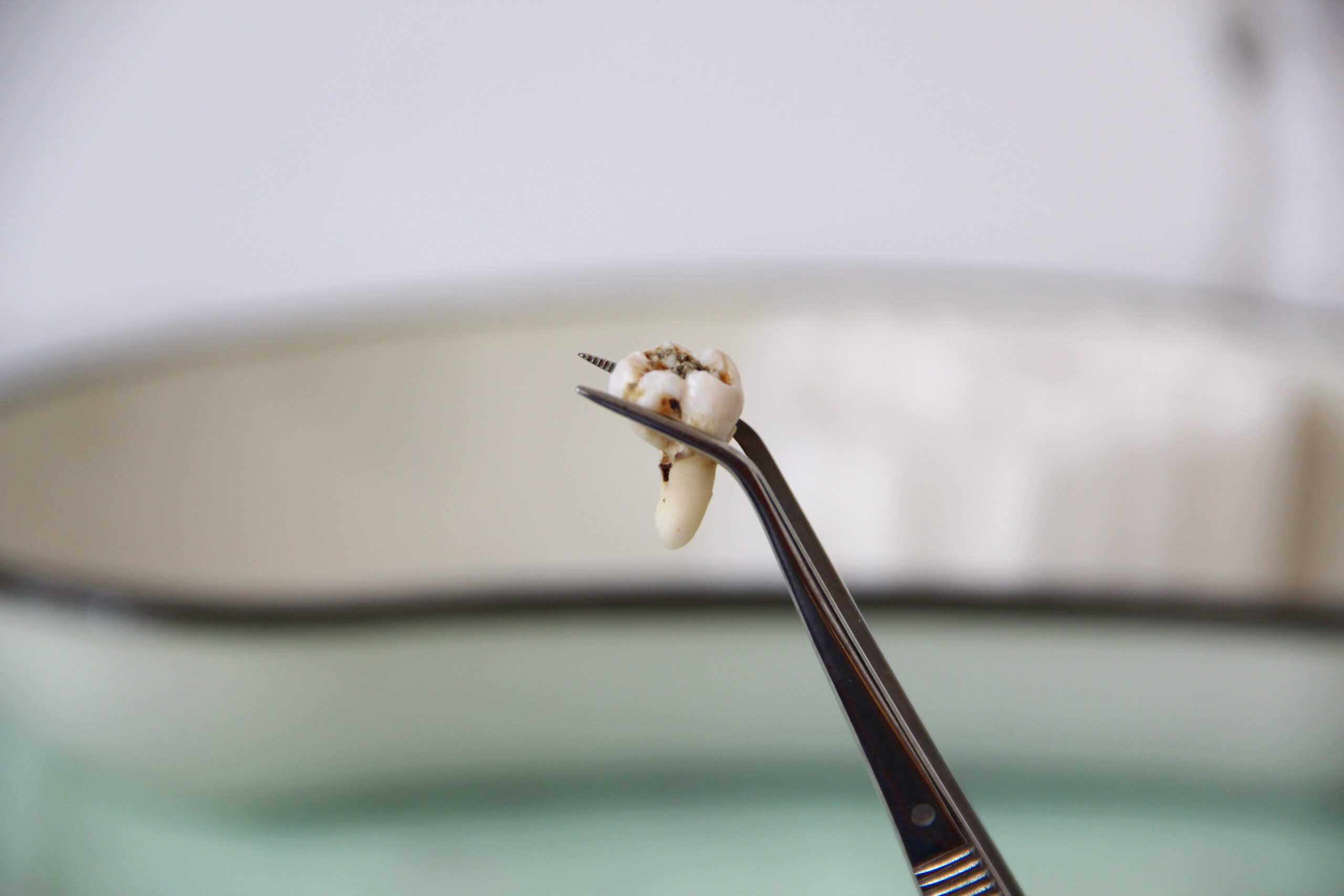
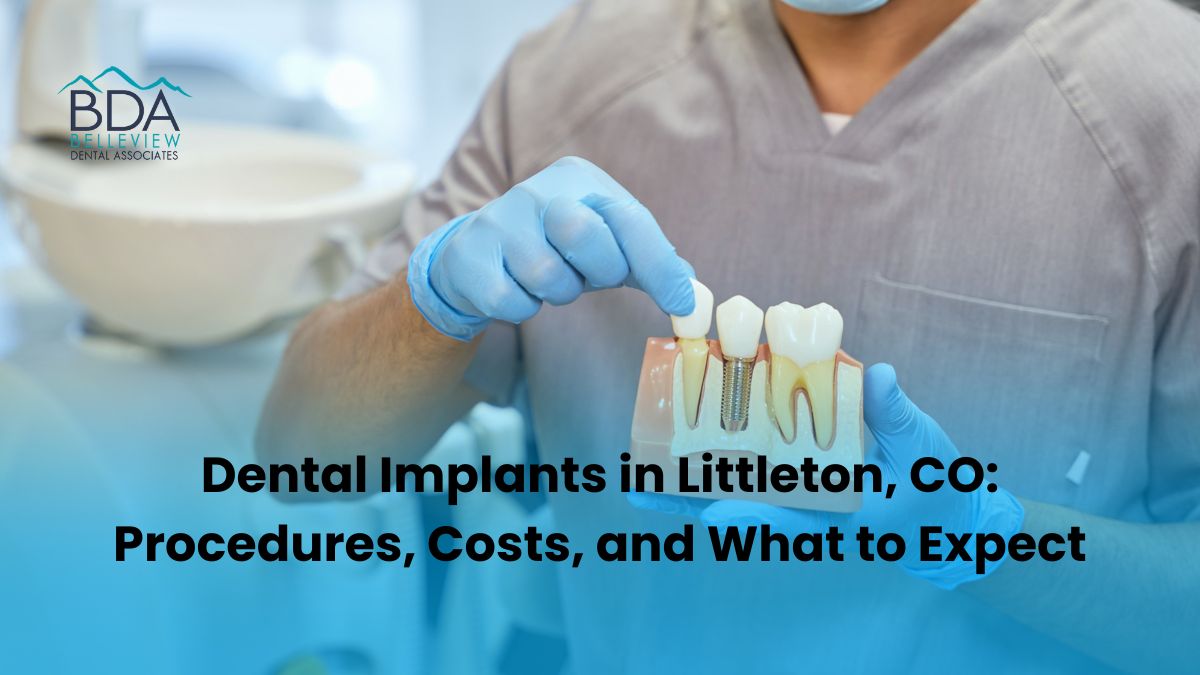
Dental implants are titanium posts surgically placed into your jawbone to replace missing tooth roots, topped with a lifelike crown for a permanent, natural-looking result. For most healthy adults, they are the most durable and functional tooth replacement option available today.
If you have been dealing with a gap in your smile, struggling with loose dentures, or simply wondering whether an implant is right for your situation, this resource covers everything you need to make a confident decision. From how the procedure works to realistic cost expectations and what sets Belleview Dental Associates Associates apart as a provider of dental implants in Littleton CO, you will find clear, straightforward answers here.
Why Missing Teeth Are a Bigger Problem Than They Look
Most people think of a missing tooth as a cosmetic issue. The reality is more serious. When a tooth root is gone, your jawbone no longer receives the stimulation it needs to stay dense and healthy. Within the first year after tooth loss, you can lose up to 25% of bone volume in that area. Over time, this bone loss reshapes your face, causes neighboring teeth to shift, and makes it harder to chew properly.
Beyond bone health, missing teeth affect:
- Speech clarity: Gaps change how air flows when you form certain sounds.
- Bite alignment: Adjacent teeth drift into the open space, creating uneven pressure.
- Digestive health: Poor chewing breaks food down less effectively before it reaches your stomach.
- Confidence: Research consistently links visible tooth loss to reduced self-esteem and social withdrawal.
Bridges and partial dentures can address some of these concerns, but neither option stops bone loss the way an implant does. That is the fundamental advantage that makes implants the standard of care for tooth replacement in modern dentistry.
How the Dental Implant Procedure Actually Works
The process is more straightforward than most patients expect, though it does unfold over several months. Here is a step-by-step breakdown of what happens from your first consultation to your final crown placement.
Step 1: Comprehensive Evaluation
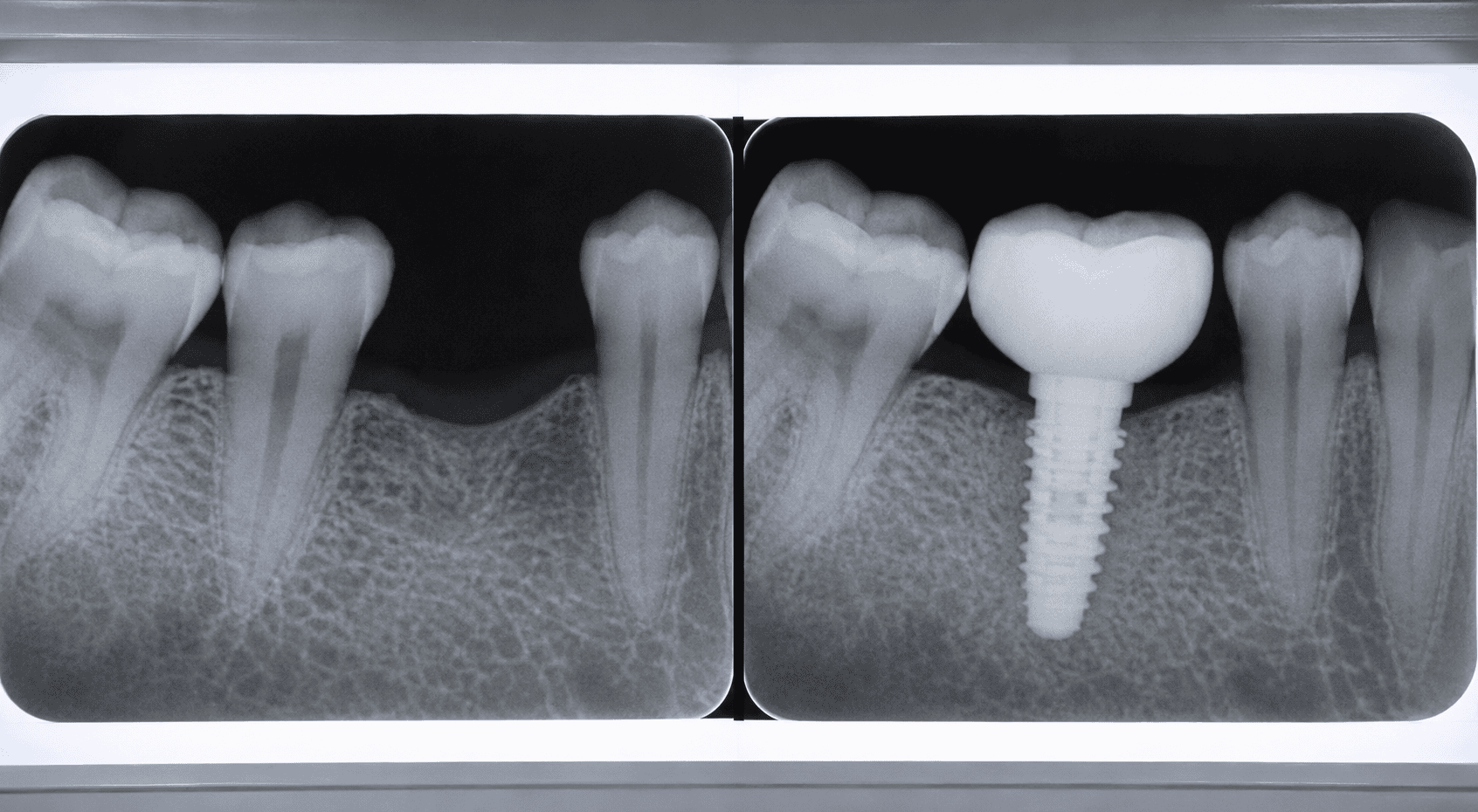
Your dentist takes digital X-rays and often a cone beam CT scan to assess your bone volume, gum health, and the positions of nearby nerves and sinuses. This imaging determines whether you are a candidate for immediate placement or whether you need preparatory work first.
Step 2: Preparatory Procedures (If Needed)
Some patients require bone grafting before an implant can be placed. A bone graft adds density to areas where loss has already occurred, and it typically needs three to six months to integrate before the implant post goes in. Not everyone needs this step, but it is common in patients who have had a missing tooth for more than a year.
Step 3: Implant Post Placement
The titanium post is placed into the jawbone under local anesthesia. Most patients describe the procedure as less uncomfortable than a tooth extraction. You go home the same day. Over the next three to six months, the post fuses with your bone in a process called osseointegration.
Step 4: Abutment and Crown Placement
Once osseointegration is confirmed, an abutment (a small connector piece) is attached to the post. Your dentist takes impressions or digital scans to fabricate a custom crown that matches the shape and color of your surrounding teeth. The crown is then secured permanently.
Step 5: Ongoing Maintenance
Implants are maintained just like natural teeth: brushing twice daily, flossing, and attending regular checkups. There are no adhesives, no soaking overnight, and no diet restrictions beyond what your dentist recommends during healing.
Cost of Dental Implants: What You Should Budget For
Cost is one of the most searched questions around implants, and the honest answer is that pricing varies widely depending on your specific case. Below is a general cost breakdown based on national averages and what patients in the greater Denver metro area typically encounter.
| Component | Estimated Cost (per tooth) |
| Initial consultation and imaging | $150 – $350 |
| Bone graft (if needed) | $500 – $3,000 |
| Implant post (titanium) | $1,500 – $2,500 |
| Abutment | $300 – $500 |
| Porcelain crown | $1,000 – $2,000 |
| Total (single tooth, no graft) | $3,000 – $5,000 |
| Total (single tooth, with graft) | $4,500 – $7,000+ |
Many dental insurance plans in the United States now cover at least a portion of implant-related costs. Delta Dental, Cigna, and MetLife, for example, have plans that include implant coverage up to certain annual maximums. Belleview Dental Associates works with numerous insurance providers and offers financing options to help spread the cost over manageable monthly payments. Unfortunately, there are some dental insurance that do not cover Implants.

Candidacy: Are You a Good Fit for Implants?
Not everyone qualifies for implants right away, but most adults can become candidates with the right preparatory care. Here is what your dentist evaluates:
Strong candidates typically:
- Have healthy gums with no active periodontal disease
- Have adequate bone volume to anchor a post
- Are non-smokers or are willing to quit during the healing period
- Do not have uncontrolled diabetes or immune conditions that impair healing
- Are at or near the end of jaw development (generally 18 years old or older)
Conditions that require extra evaluation:
- Heavy tobacco use slows osseointegration and increases failure risk
- Bisphosphonate medications (used for osteoporosis) can affect bone healing
- Prior radiation to the jaw may limit blood supply to the implant site
- Bruxism (teeth grinding) increases stress on the implant post
If any of these apply to you, it does not automatically mean implants are off the table. It means your treatment plan needs customization. Belleview Dental Associates takes a thorough, patient-specific approach to these evaluations rather than applying a one-size-fits-all protocol.
Implants vs. Other Tooth Replacement Options
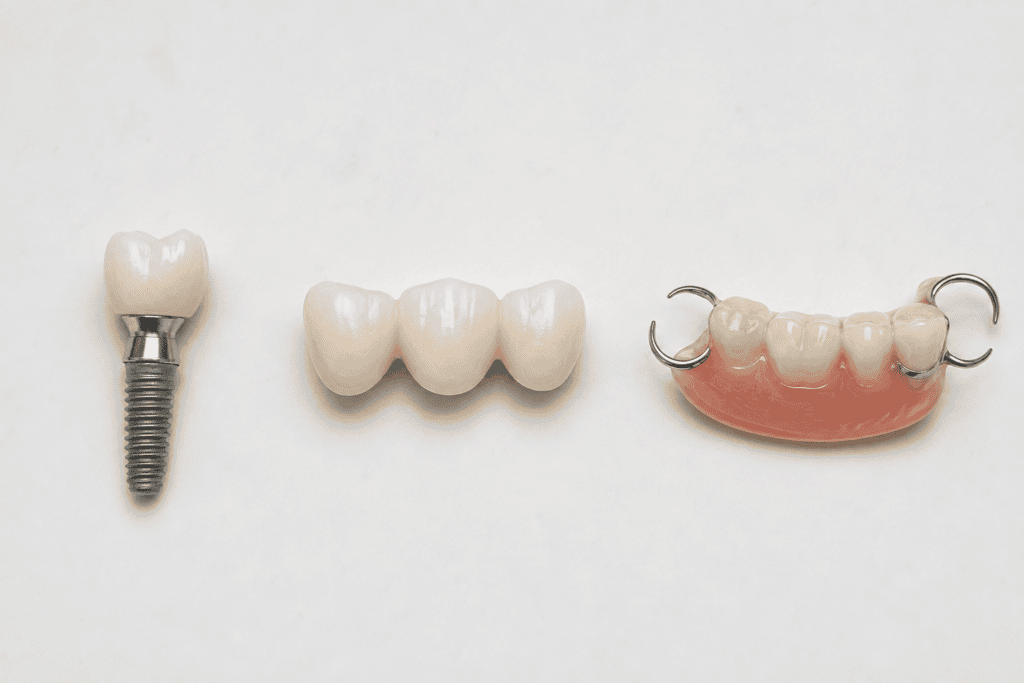
Understanding your alternatives helps you make a more informed decision. The three primary options are implants, bridges, and dentures.
| Feature | Dental Implant | Fixed Bridge | Removable Denture |
| Prevents bone loss | Yes | No | No |
| Preserves adjacent teeth | Yes | No (requires grinding) | Yes |
| Lifespan | 25+ years (with care) | 10-15 years | 5-10 years |
| Daily maintenance | Brush and floss normally | Special floss threaders | Remove and soak nightly |
| Feels like natural tooth | Yes | Close | Less so |
| Upfront cost | Higher | Moderate | Lower |
| Long-term cost | Lower | Moderate to high | Moderate |
The higher upfront cost of implants often translates to lower long-term expense because they do not typically need replacing the way bridges and dentures do. A bridge, for instance, involves grinding down healthy neighboring teeth and carries a higher failure rate over a 15-year window.
Why Belleview Dental Associates for Dental Implants in Littleton CO
Choosing a provider for an implant procedure is not a decision to make lightly. You want a team that has performed this procedure consistently, uses current technology, and takes time to walk you through every stage.
Belleview Dental Associates brings several important qualities to patient care:
- Advanced imaging technology: Cone beam CT scans allow for precise implant planning before surgery begins, reducing guesswork and improving accuracy.
- Comprehensive treatment under one roof: Rather than being referred to multiple specialists across town, you can often complete your evaluation, preparatory procedures, and final restoration at one location.
- Insurance and financing coordination: The Belleview Dental Associates team works directly with your insurance company and offers flexible payment arrangements so cost does not become a barrier.
- Patient-centered communication: Every step of the implant process is explained clearly before it happens. You will not be handed a consent form without a conversation.
- Convenient Littleton location: For residents of Littleton, Highlands Ranch, Centennial, and the surrounding Denver south metro area, the location minimizes travel during a multi-appointment process.
Belleview Dental Associates’s website at belleviewdental.com contains detailed information on implant services, patient financing options, and appointment scheduling.
Things to Know
Before you commit to any treatment plan, here are a few key facts and common oversights worth keeping in mind:
- Implants are not an overnight process. The full treatment, from post placement to final crown, can take six to twelve months depending on whether bone grafting is required. Plan your timeline accordingly.
- Smoking dramatically increases failure rates. Studies show smokers have implant failure rates of 6-20%, compared to 2-3% in non-smokers. Your dentist may require you to stop smoking before and after surgery.
- Not all implants are the same. Implant systems vary in material quality, manufacturer certification, and design. Ask your dentist which implant system they use and why.
- Insurance coverage is improving but still inconsistent. More plans now include implants, but annual maximums often cap at $1,000 to $2,000, meaning you will still have out-of-pocket costs. Get an itemized pre-treatment estimate.
- Gum disease must be treated first. Active periodontal disease is a contraindication for implant placement. Your dentist will need to restore gum health before proceeding.
- Implant maintenance matters long-term. While implants themselves cannot decay, the gum and bone around them can still develop a condition called peri-implantitis, an infection similar to gum disease. Regular cleanings are essential.
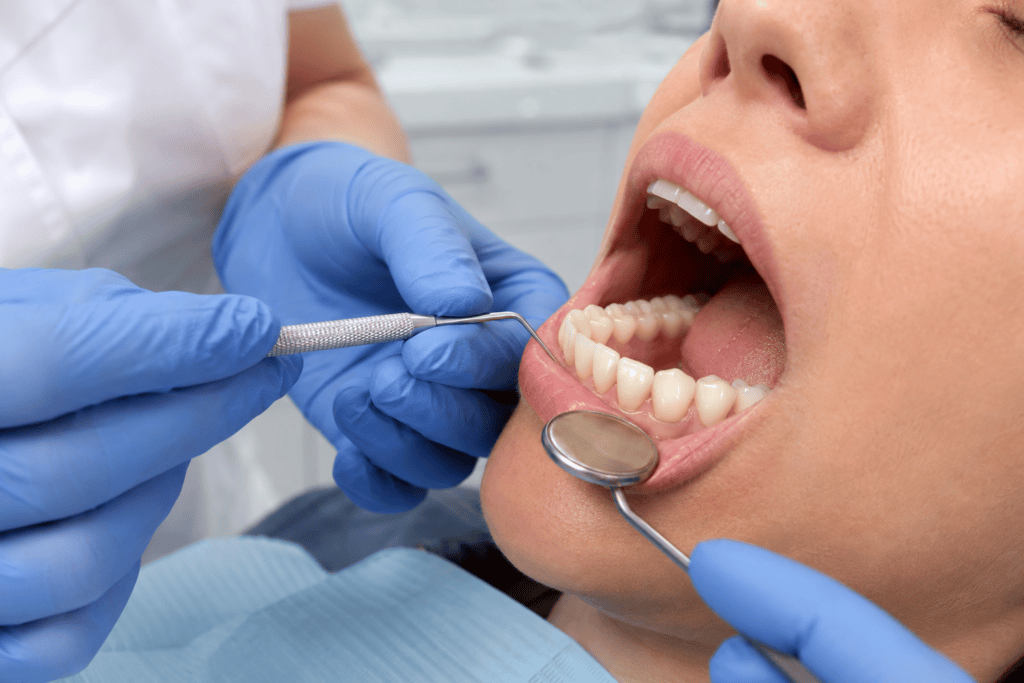
Ready to Schedule Your Implant Consultation?
The single most productive step you can take right now is booking a comprehensive implant evaluation at Belleview Dental Associates. During that appointment, the team will take imaging, review your medical history, and give you a clear picture of which treatment path makes sense for your specific situation, including timeline and total cost. Visit belleviewdental.com to request an appointment or call the office directly. Come prepared with your insurance information and a list of any medications you take.
Frequently Asked Questions
Q: How long do dental implants actually last?
With proper care, dental implants can last 25 years or longer, and many last a lifetime.
The titanium post itself rarely fails once fully integrated with the bone. The porcelain crown on top may need replacement after 15-20 years due to normal wear, but the post beneath typically remains stable for decades with consistent oral hygiene and regular professional checkups.
Q: Does the dental implant procedure hurt?
Most patients report that the procedure is significantly less painful than they anticipated, comparable to or easier than a tooth extraction.
Local anesthesia keeps you comfortable during the surgery itself. Post-procedure soreness, mild swelling, and some bruising are normal for three to five days and are managed effectively with over-the-counter pain relievers like ibuprofen. Prescription pain medication is occasionally needed but not the norm.
Q: Can dental implants fail, and what causes it?
Implants can fail, though it is uncommon, occurring in roughly 2-5% of cases in healthy, non-smoking patients.
The most common causes of failure include infection during healing, smoking, insufficient bone density that was not identified before placement, and uncontrolled systemic conditions like diabetes. Choosing an experienced provider who conducts thorough pre-surgical evaluation significantly reduces this risk.
Q: Will my insurance cover dental implants in Littleton CO?
Coverage varies widely by plan, but many dental insurance policies now include at least partial reimbursement for implant-related procedures.
Some plans cover the crown but not the post, while others cover a percentage of the total cost up to your annual maximum. Belleview Dental Associates’s administrative team can perform a benefits check before your treatment begins so you know exactly what your out-of-pocket responsibility will be.
Q: What is the difference between a single implant and All-on-4?
A single implant replaces one missing tooth, while All-on-4 uses four strategically placed implants to support a full arch of replacement teeth.
All-on-4 is designed for patients who have lost most or all of their teeth and want a fixed, non-removable alternative to full dentures. It is a more complex procedure with a higher total cost but delivers dramatically better function and stability compared to conventional full dentures.
The Bottom Line on Dental Implants in Littleton CO
Dental implants remain the most biomechanically sound and longest-lasting option for replacing missing teeth. They protect your jawbone, preserve your neighboring teeth, and function so closely to natural teeth that most patients forget they have them. The investment is higher upfront than a bridge or denture, but the long-term value is difficult to match.
If you are in the south Denver metro area and want a provider who combines clinical precision with clear, patient-friendly communication, Belleview Dental Associates is worth your first call. Visit belleviewdental.com today to review implant services in detail and schedule your evaluation.